Three Generations, One Sea View: How to Share a Bournemouth Hotel Without It Becoming a Military Operation
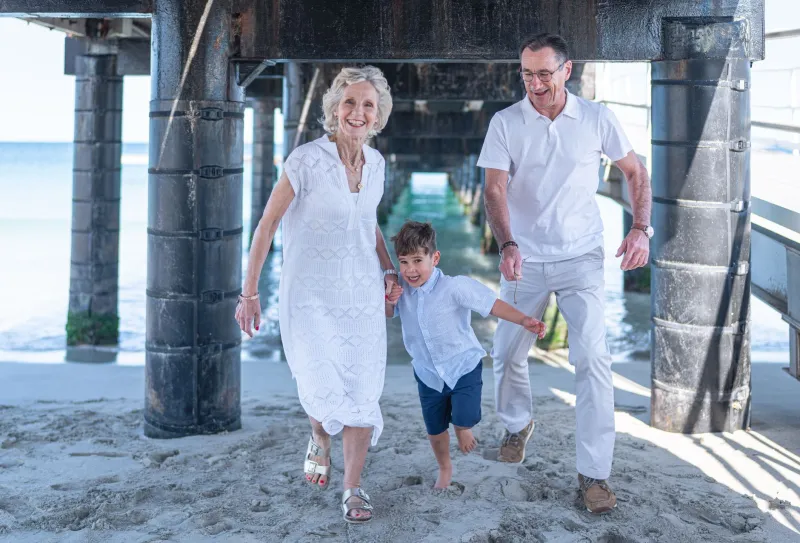
There is a particular kind of optimism that strikes when someone suggests a three-generation seaside break. It sounds lovely in the group chat: one hotel, one sea view, everyone together. It sounds slightly less lovely when you remember that your father cannot manage more than four steps without a pause, your two-year-old treats bedtime as a suggestion, and you are the one in the middle holding the buggy, the room keys and the emotional weather report.
The good news is that Bournemouth is unusually well suited to this sort of trip, and the town's older seafront hotels — the ones with the wide staircases and the slightly tired but generous lounges — can be far more accommodating than a shiny modern building with rigid room types. The trick is choosing on the boring details rather than the brochure photograph.
Start with the rooms, not the itinerary
Most multigenerational trips fall apart at the planning stage because someone books a 'family room' that turns out to be a double with a sofa bed wedged against the wardrobe. Before you look at anything else, ask the hotel three questions: what does the sofa bed actually sleep, how many bathrooms are in the room, and can you guarantee adjoining rather than merely nearby rooms?
Adjoining is the word to use. 'Adjacent' can mean across a corridor, around a corner, or — memorably, in one case — on a different floor entirely. If the hotel cannot offer a genuine interconnecting pair, ask for two rooms side by side with the grandparent room nearest the lift, so nobody is doing a fifty-metre corridor walk in a dressing gown at six in the morning.
Then think about the bathroom maths. Two bathrooms across two rooms changes the whole rhythm of the day. One bathroom shared by five people is survivable, but only if you decide in advance who bathes the toddler and when. A bath is non-negotiable for most small children; a walk-in shower with a grab rail may be non-negotiable for a grandparent. Ask about both, and ask whether the bath has a non-slip mat rather than assuming.
Other things worth requesting by phone, not by booking form: a room away from the function room or the kitchen extractor, a fridge for milk, and confirmation of the exact number of steps between the lift and the door. That last one sounds pedantic until you are the one carrying a sleeping child up a half-landing.
The lift question nobody puts on the website
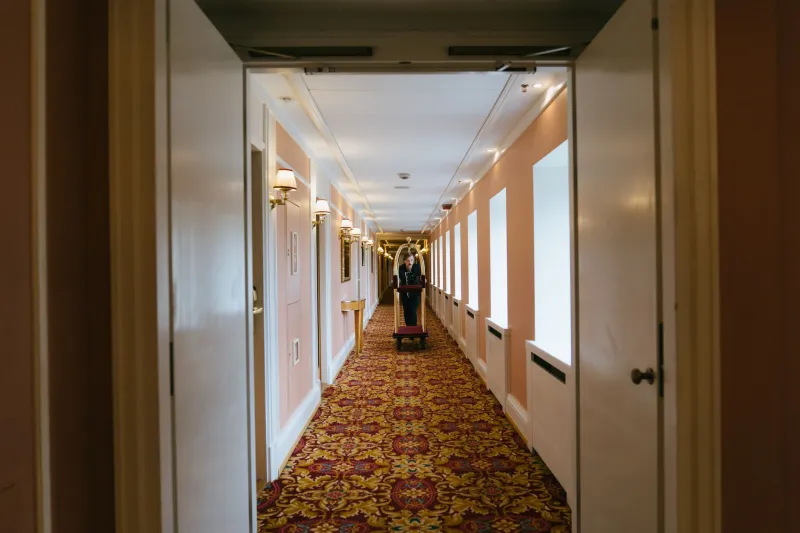
Plenty of Bournemouth's traditional seafront hotels were built when a lift was a novelty and a staircase was a statement. Some lifts are charmingly small — two people and a suitcase, if the suitcase is well behaved. Others stop half a floor short of the landing, which is fine for most guests and a genuine problem for anyone with a walking aid.
Ring and ask directly: is the entrance step-free, does the lift reach the bedroom floor, and how many steps are there from the lift to the room door? A hotel that answers these questions quickly and precisely is usually a hotel that has thought about access properly.
Outdoors, the seafront itself is far more forgiving than its cliffs suggest. The promenade from the pier towards Alum Chine is flat and wide, the land train removes a good chunk of walking effort, and the cliff lifts on the East and West Cliffs save the zig-zag climb for anyone who would rather not attempt it. The Russell-Cotes Art Gallery, the Oceanarium and the pier all work as short, low-commitment outings with a bench never far away.
Breakfast is two sittings pretending to be one
Here is where expectations need managing. Grandparents tend to arrive at 7:30 with the paper. Toddlers arrive at 7:30 with volume. Parents arrive at 8:15 looking for coffee and forgiveness. A single breakfast sitting can work beautifully — but only if you ask whether you can be seated early and linger, rather than being shuffled out at 9:15 because the next wave is due.
A hotel with a proper dining room and a bit of slack in the service will let you spread out. A hotel running breakfast like a departure lounge will not. Ask which it is.
Dinner is the same problem in reverse. An early sitting at half five suits the small ones; the grandparents may genuinely prefer seven. Rather than forcing a compromise nobody enjoys, consider splitting starter and main: everyone eats the first course together, then one adult takes the toddler up while the other two finish at a civilised pace. It is not the fantasy of the whole family around one table for two hours, but it is considerably more restful than the alternative.
Protect the quiet hour
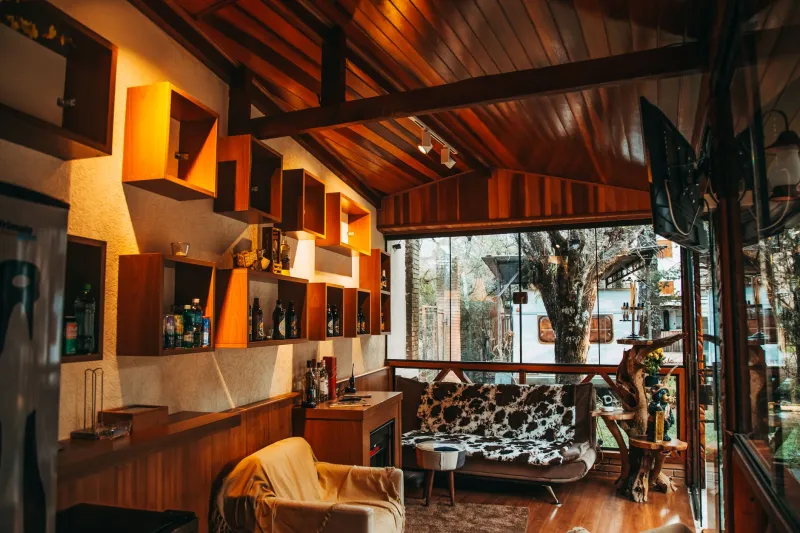
The non-walkers in your party are not necessarily looking for entertainment. They are looking for a chair with a view, a pot of tea, and permission to do nothing for ninety minutes. Find out whether the hotel lounge faces the sea, whether it has comfortable rather than decorative seating, and whether there is a corner where a sleeping toddler in a buggy will not be judged.
Then build the afternoon around a rotation. One adult takes the children to the sand; one stays with the grandparents in the lounge; everybody swaps after teatime. It sounds clinical written down. In practice it is the difference between a break and a shift.
The honest bit
Someone will be woken at five. Somebody's shower will run cold. The grandmother will want the armchair by the window and the toddler will want to be on the beach simultaneously, and no hotel on the south coast can fix that.
What a well-chosen traditional hotel can fix is the background friction: the steps, the queue for the bathroom, the impossible dinner time, the long walk back when everyone is tired. Get those right and the rest is just family life, relocated to a place with a pier and better air. Which, on a clear November morning with the light coming off the water, is really the whole point.