The Ten-Minute Verdict: What a Bournemouth Hotel Tells You Before You Unpack
There's a moment in every Bournemouth break when the holiday hasn't properly started yet. You're on the pavement with a wheelie bag, the sea is doing its thing somewhere below the cliff, and the hotel door is in front of you. What happens in the ten minutes after you push it open tells you more about the stay ahead than any photograph ever could.
I've come to think of check-in as the most honest part of a traditional seaside hotel. Not the room — the room can be repainted, and often has been. Not the view, which is a matter of geography and luck. The front desk is where a hotel shows you its staffing, its habits and its idea of what guests are for. You can learn a lot before you've unzipped a single bag.
The Threshold Test
Start outside. On East Overcliff Drive and the West Cliff alike, the approach is part of the reading. Is the brass on the door dulled to a nice patina, or simply neglected? Does the door open with one hand, or does it need a shoulder? Small things, yes, but a hotel that keeps its entrance working has usually thought about the rest of it too.
Then the lobby. Ignore the chandeliers. Notice the smell — not whether there is one, but what kind. Furniture polish, a bit of woodsmoke and a faint carpet shampoo is the smell of a building that's been looked after. One aggressive plug-in doing all the work is usually covering something up. Notice the luggage trolley, too: is it there, is it upright, do the wheels turn? In older seaside hotels the trolley is a decent proxy for maintenance generally. And notice whether anyone offers to take it off you. Not because you can't manage a suitcase, but because offering is the job.
Behind the Desk, Not Just Under the Clock
Here's the tell I trust most: how many people are working the desk, and what else are they doing?
In a well-run traditional hotel in November, the person greeting you is doing one job. They look up, they ask how you travelled, they don't glance at a screen mid-sentence. In a stretched one, the same person is also the barman, the switchboard and the person who has to ring housekeeping about a towel. You'll see the phone go, the apology, the half-turn away. None of that is the fault of the person in front of you. It is, though, information about the next three days.
Pay attention to the pace as well. A desk that's slightly slow but calm and specific — "your room's on the second floor, the lift is just there, breakfast is seven till ten, and if you want the pier tonight, go left out of the gate" — is a far better sign than brisk efficiency with nothing attached. Speed without detail is a queue being managed. Detail is hospitality.
The Tips That Tell You the Most
Which brings me to the most underrated part of check-in: the local advice. Ask for it deliberately and see what comes back.
- Tide times. Anyone working a Bournemouth front desk should know roughly when the water comes in and out, because the beach below the cliff has a habit of disappearing.
- Which chine. Middle Chine, Alum Chine, the zig-zag at East Cliff — a good answer tells you whether the person actually walks this stretch of coast.
- Dinner. A table booked at the desk, rather than a shrug towards the nearest chain, is worth more than any loyalty card.
- Transport. Where the buses go from, roughly what a taxi to the Triangle should cost, whether the walk back up the cliff at night is lit.
Vague, cheerful non-answers to all four aren't a disaster. They are, though, a fair warning that you'll be planning your own week.
Small Things That Quietly Matter
Ask about breakfast timing even if it's printed on your key wallet, and listen for whether the answer includes the busy window. Ask where to park and whether the permit covers the morning. Ask whether the room has a bath, a shower, or the dreaded shower-over-bath with a curtain that behaves like a small ghost.
And listen to how the desk handles the word "quiet". In a traditional seaside hotel in the off-season, "is it quiet at night?" is a perfectly reasonable question and should get a straight answer — the function room, the bar, the seagulls, the road. A hotel willing to admit its own noise is a hotel you can trust about everything else.
If It's Not Right, Say So Now
The first ten minutes are also your best chance to change something. If the room sits above the kitchen, if the lift is out and you're on the fourth floor, if the "sea view" is a sea glimpse past a fire escape — say it at the desk, pleasantly, before you unpack. Front desks have far more flexibility at three in the afternoon than at eleven at night. The trick is to ask as though you expect a solution rather than an argument.
The Unpacking Verdict
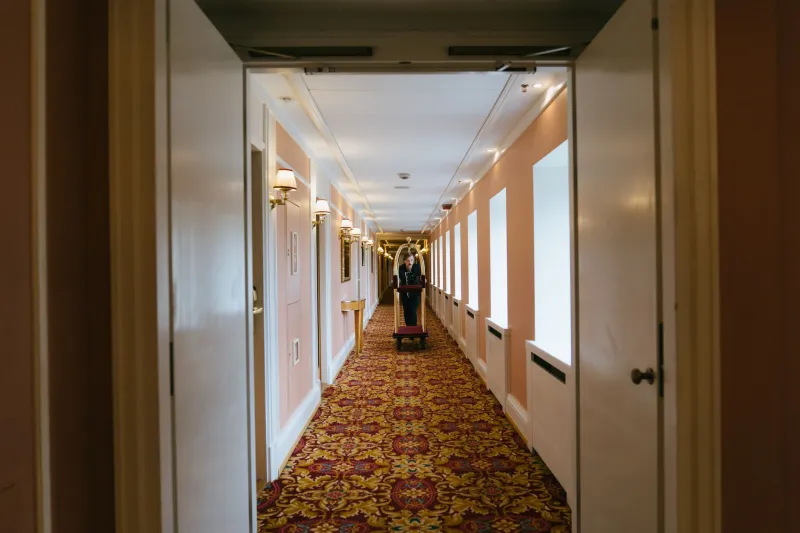
None of this is really about luxury. Some of the best check-ins on this coast happen in buildings with creaking stairs and a lift older than the receptionist. What you're reading for is attention: whether anyone noticed you'd arrived, whether the answers were real, and whether the place seems to be run by people who are on top of it. Get that right and the chintz, the corridor carpet and the slightly tired bathroom stop mattering very much at all.
Ten minutes, one verdict. Then you can put the kettle on.